



The Ktunaxa origin story speaks of a time, before the people, when animals populated the world. At that time there was a disturbance caused by a huge water monster known as Yawuʔnik̓ who killed many of the animals. It was decided by the animals that Yawuʔnik̓ had to be destroyed. A war party was formed by the chief animal, Naⱡmuqȼin. Yawuʔnik̓ was quick to descend on the Kootenay (wu·u ʔaqsⱡmaknik ʔakinmituk) and Columbia (Miȼ̓qaqas) river system and the other animals gave chase.
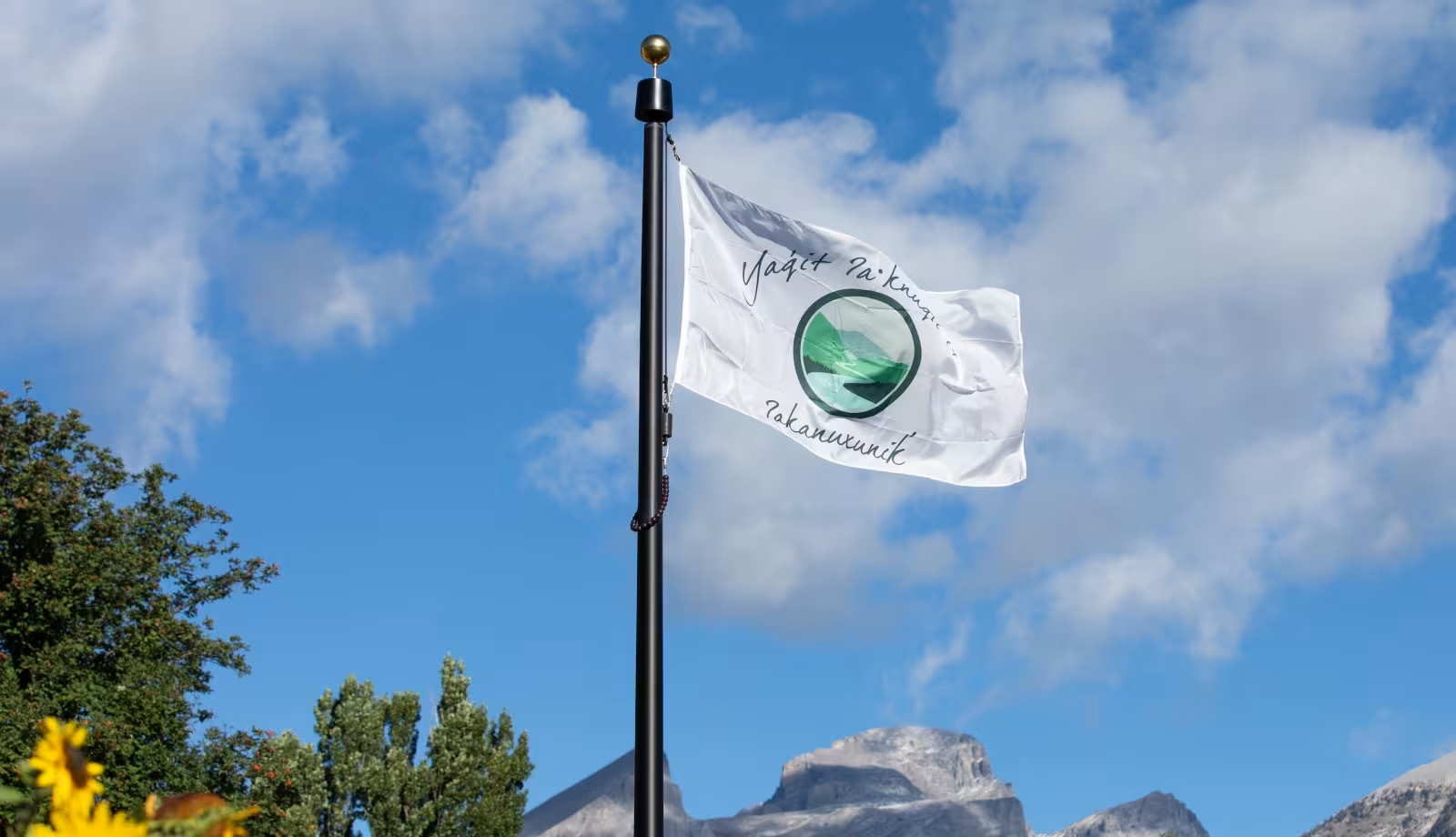
The Ktunaxa Nation
Ktunaxa (pronounced ‘k-too-nah-ha’) people have been stewards of the western slopes of the Rocky Mountains, adjacent to the Kootenay and Columbia Rivers and the Arrows Lakes of British Columbia, for more than 10,000 years. The Ktunaxa traditional territory covers approximately 70,000 square kilometres (27,000 sq miles) within the southeastern BC, and part of Alberta, Montana, Washington and Idaho.
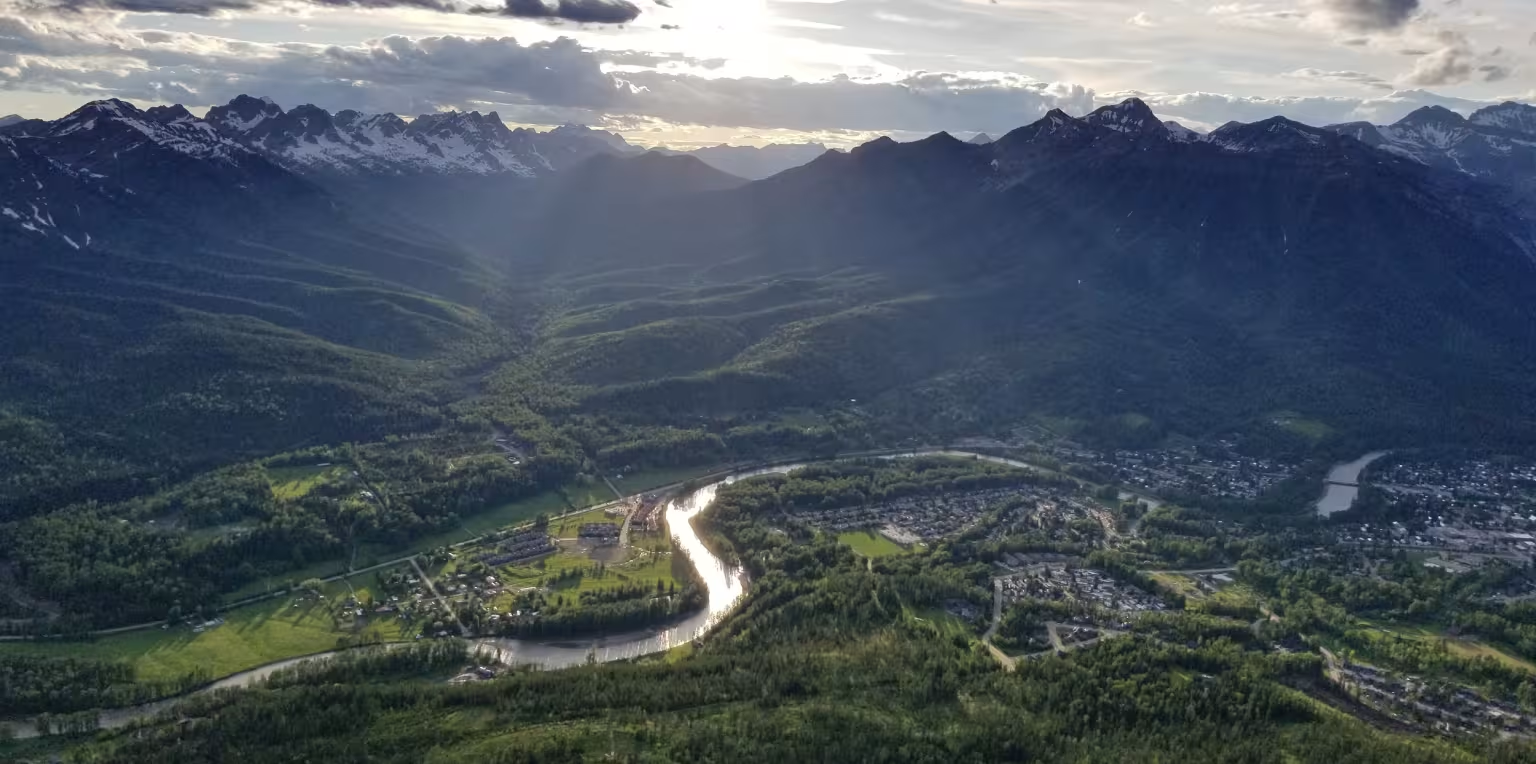
The Ktunaxa have lived on these lands since the time of Creation. This includes the area now recognized as Qukin ʔamakʔis (Land of the Raven – the broader Elk Valley area), Ȼaqahak (Fernie) and Wasaʔki (the western entrance to the Kutenai Trail along the Elk River). The Ktunaxa language is unique among Native linguistic groups in North America.
The Creation Story

When Yawuʔnik̓ was killed, and butchered and distributed among the animals, Yawuʔnik̓’s ribs were scattered throughout the region that now form the Hoodoos seen throughout the region. When the prophecy was fulfilled, the spirit animals ascended above and are now the guiding spirits of the Ktunaxa. In all the excitement Naⱡmuqȼin rose to his feet and stood upright hitting his head on the ceiling of the sky. He knocked himself dead. His feet went northward and is today known as Ya·kⱡiki, in the Yellowhead Pass vicinity. Naⱡmuqȼin’s head is near Yellowstone Park in the State of Montana. His body forms the Rocky Mountains.
Wasaʔki was known as the western entrance to the Kutenai Trail which parallels the Elk River to the junction with the ʔapakiⱡak (Wigwam) up to its union with Lodgepole Creek and ascends to Kak̓qaʔit Morrissey Creek. The trail followed Morrissey and crossed the ʔaqnisaⱡ (Flathead Range) to the North Kootenay Pass down Carbondale Creek to Castle River which led to the Oldman River into what is now Alberta. Another trail used only in the winter with snowshoe parties that switch-backed way up Kak̓qaʔit (Morrissey Mountain) to the summit and over, which is called Middle Kootenay Pass today.
When Yawuʔnik̓ was killed, and butchered and distributed among the animals, Yawuʔnik̓’s ribs were scattered throughout the region that now form the Hoodoos seen throughout the region. When the prophecy was fulfilled, the spirit animals ascended above and are now the guiding spirits of the Ktunaxa. In all the excitement Naⱡmuqȼin rose to his feet and stood upright hitting his head on the ceiling of the sky. He knocked himself dead. His feet went northward and is today known as Ya·kⱡiki, in the Yellowhead Pass vicinity. Naⱡmuqȼin’s head is near Yellowstone Park in the State of Montana. His body forms the Rocky Mountains.
Wasaʔki was known as the western entrance to the Kutenai Trail which parallels the Elk River to the junction with the ʔapakiⱡak (Wigwam) up to its union with Lodgepole Creek and ascends to Kak̓qaʔit Morrissey Creek. The trail followed Morrissey and crossed the ʔaqnisaⱡ (Flathead Range) to the North Kootenay Pass down Carbondale Creek to Castle River which led to the Oldman River into what is now Alberta. Another trail used only in the winter with snowshoe parties that switch-backed way up Kak̓qaʔit (Morrissey Mountain) to the summit and over, which is called Middle Kootenay Pass today.