

Hero graphic background

An Overview

of Fernie's History

Fernie is named after William Fernie who, alongside Colonel James Baker, was the driving force behind the coal mines located here.

Fernie Throughout Time

Starting in 1887 and for ten long years, William Fernie and Colonel James Baker struggled to raise the money necessary to build not only the mines but also the railway needed to transport the coal to the outside world. Finally, in 1897 they achieved their goals, though effectively losing control of the company to eastern interests.

Group of men in old-fashioned clothing stand in front of a mine entrance, one sitting in front with a log.

The Boom of the Coal Industry

With the arrival of the Canadian Pacific Railroad in Fernie in 1898, the production of coal in the Elk Valley began in earnest and the new town of Fernie took shape opposite the CPR tracks, to the north of the original settlement. People built more substantial houses, while the business community hired contractors to build estates, retail stores and office buildings.

The construction of Fernie generated the development of sawmills, hardware stores, blacksmith shops and other suppliers. This first Fernie, however, did not last as in April 1904 a fire destroyed Fernie’s commercial district. Later that year, Fernie was incorporated as a municipality. Four years later, on August 1, 1908, a second firestorm visited the City and in less than ninety minutes the town was once again reduced to smouldering ashes. The resulting reconstruction (in brick instead of wood) dramatically transformed the city’s landscape.

By 1910, Fernie’s businesses and their buildings were firmly established. They had expanded their stores and offices to serve a more diverse community of 6,000 people. The Great Depression brought Fernie to its knees, reducing both population and prosperity. Only government subsidies kept the stagnant coal industry alive until the 1960’s when Japanese markets revitalized mining, and coal became once more, as it remains today, a pillar in Fernie’s economy.

A historic black & white photograph of three people in winter clothing standing on a snowy slope, with a snowy hill and trees in the background.

Tourism in Fernie

Tourism has also played its part in Fernie's past. Fueled by enthusiastic residents, Snow Valley Ski Development - a locally owned company - opened the ski hill at its present site in January 1963 and Fernie’s bid for the 1968 Winter Olympics helped lay the foundation for today’s Fernie Alpine Resort.

Over one hundred years after the settlement began, the factors influencing Fernie's early growth are still at work. Local businesses still depend greatly on mine workers’ incomes and their families’ demands for their continued existence, alongside which the ongoing development of tourism influences both the location and character of businesses in the town. Building contractors, suppliers and tradespeople have once again come to Fernie – this time to build tourist accommodations and attractions.


As Fernie moves into the future, local and tourist trade alike remain the key to its success.
 

Explore Fernie Through Historic Attractions

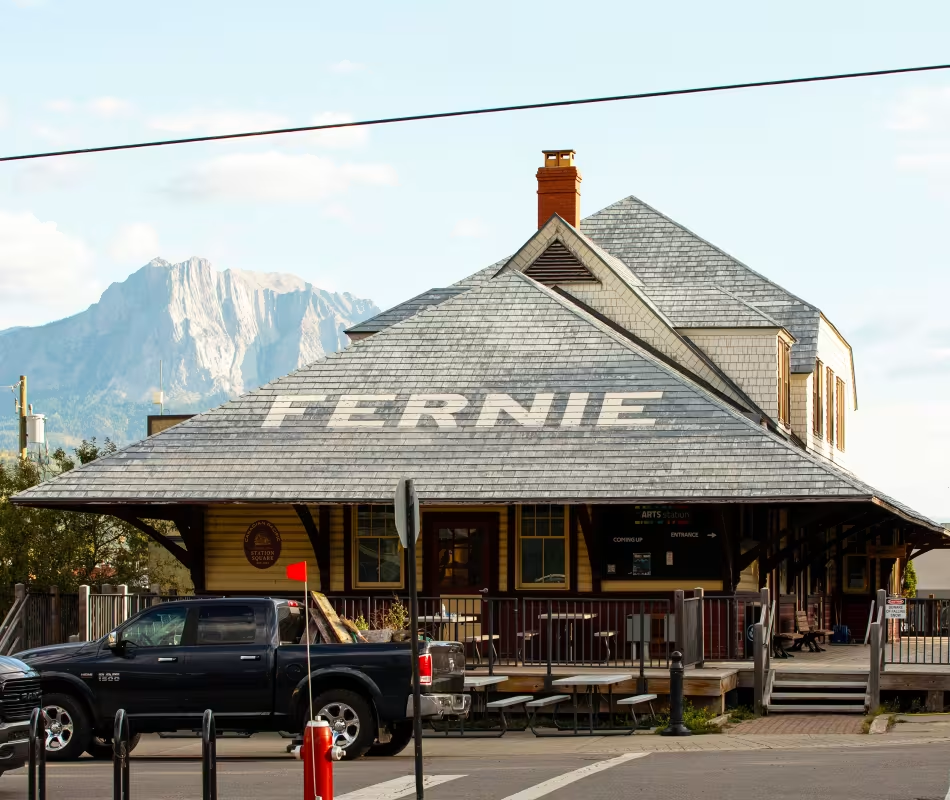
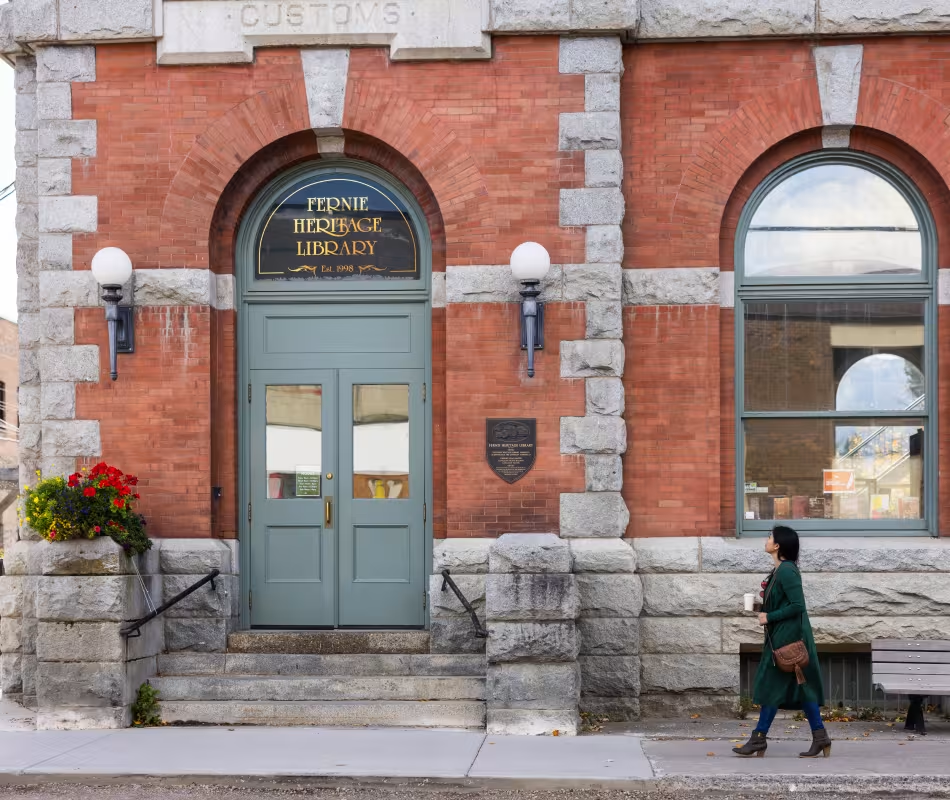
Fernie proudly preserves its rich cultural and architectural heritage. Visit these historic attractions or embark on a self-guided Heritage Walking Tour.