


Adventurous at heart. Friendly by nature.
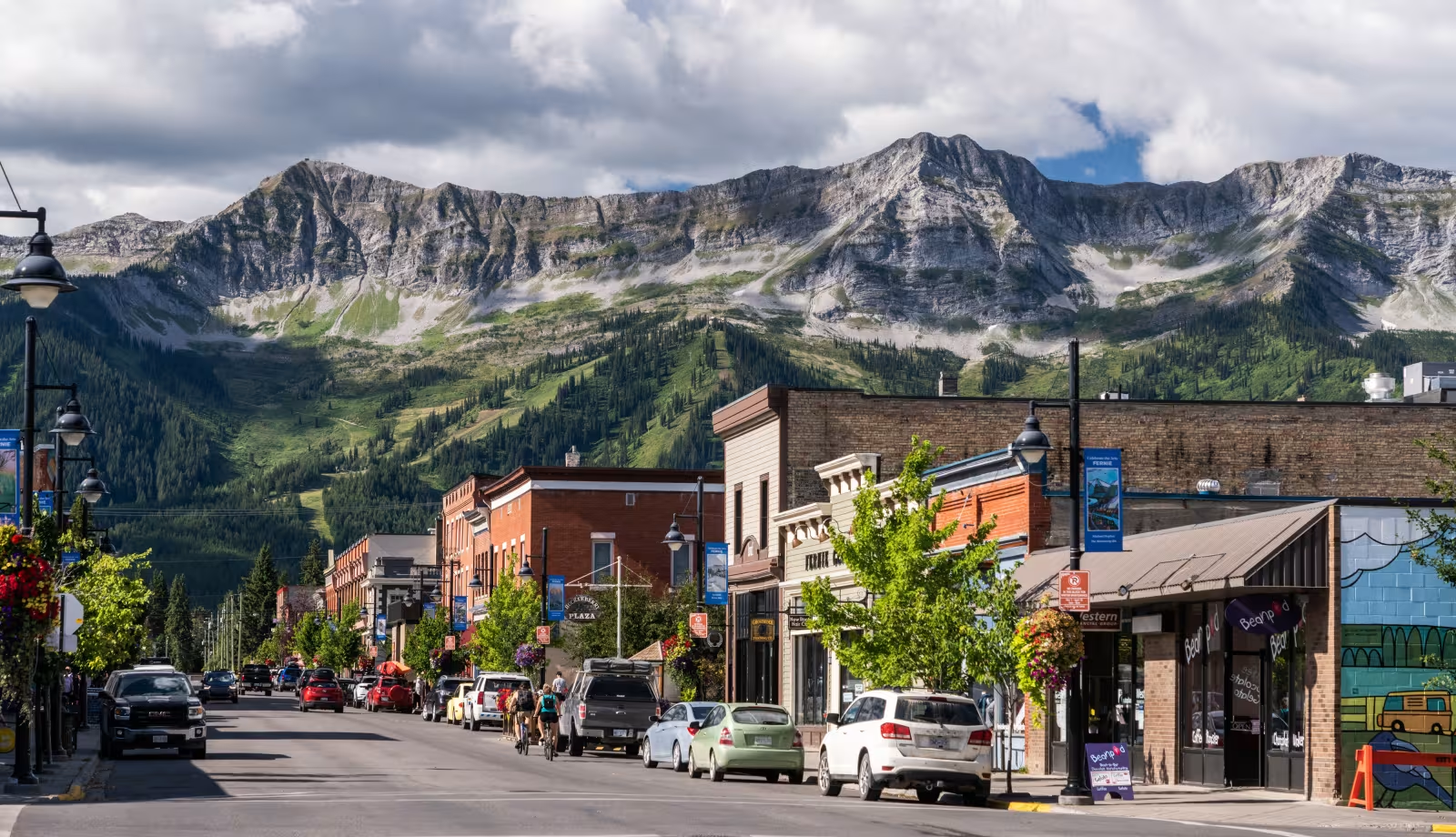
Nestled in the Canadian Rockies of Southeast British Columbia, Fernie is a living mountain community that welcomes visitors with open arms and unspoiled views. With its historic downtown, a vibrant local culture, and terrain that invites exploration across all four seasons, Fernie offers more than a getaway. It's a place to breathe, connect with nature, and reconnect with one another.
Steeped in a history that spans mining times, the evolution of the ski industry, and an ambitious bid for the Olympics, today's visitors describe Fernie as simply authentic. It is a place where heritage, nature, and community come together effortlessly. Maybe it’s the century-old downtown, the untouched wilderness, or the friendly faces that make you feel right at home. Whatever it is, Fernie is notorious for capturing hearts.
The Many Sides of Fernie
Fernie Facts
A quick guide to getting to know Fernie
- Founded in 1898, incorporated in 1904
- Year round population 6,320+
- Town elevation 1,010 m/3,314 ft
- Polar Peak elevation (highest commercially accessed point, at Fernie Alpine Resort) 2134 m / 7050 ft
- Fernie's temperate mountain climate consists of four distinct seasons
- Fernie's time zone is Mountain Standard Time (UTC-7), summer (UTC-6) for MDT
- Located in the Kootenay Region in the South-Eastern corner of British Columbia, Canada
- Approximately 1000 km East of Vancouver BC, 300 km South-West of Calgary, Alberta, and 188 km North of Kalispell, Montana US
- Fernie is famous as a powder town with over 9 m / 30 ft of snow annually during the winter season (Dec-Apr). Fernie Alpine Resort is a world-class ski & snowboard destination.
- Local prominent mountain ranges and peaks include Lizard Range, Three Bears, Mt. Fernie, Three Sisters, Mt. Procter, Mt. Hosmer, Castle Mountain and Morrissey Ridge.
- Fernie lies on the banks of the Elk River, a 220 km / 137 mile long river originating from the Elk Lakes near the Continental Divide in the Rockies. The river is well known for fly fishing, white water rafting and other river sports.
- Explorer David Thompson travelled along the Elk River in 1811 and called it the Stag River. The river was labelled Elk River on John Palliser's 1857-1858 map.
- The Elk Valley is home to four large open-pit coal mines owned and operated by Elk Valley Resources. The closest one to Fernie is located near Sparwood.
Fernie Facts
A quick guide to getting to know Fernie
- Founded in 1898, incorporated in 1904
- Year round population 6,320+
- Town elevation 1,010 m/3,314 ft
- Polar Peak elevation (highest commercially accessed point, at Fernie Alpine Resort) 2134 m / 7050 ft
- Fernie's temperate mountain climate consists of four distinct seasons
- Fernie's time zone is Mountain Standard Time (UTC-7), summer (UTC-6) for MDT
- Located in the Kootenay Region in the South-Eastern corner of British Columbia, Canada
- Approximately 1000 km East of Vancouver BC, 300 km South-West of Calgary, Alberta, and 188 km North of Kalispell, Montana US
- Fernie is famous as a powder town with over 9 m / 30 ft of snow annually during the winter season (Dec-Apr). Fernie Alpine Resort is a world-class ski & snowboard destination.
- Local prominent mountain ranges and peaks include Lizard Range, Three Bears, Mt. Fernie, Three Sisters, Mt. Procter, Mt. Hosmer, Castle Mountain and Morrissey Ridge.
- Fernie lies on the banks of the Elk River, a 220 km / 137 mile long river originating from the Elk Lakes near the Continental Divide in the Rockies. The river is well known for fly fishing, white water rafting and other river sports.
- Explorer David Thompson travelled along the Elk River in 1811 and called it the Stag River. The river was labelled Elk River on John Palliser's 1857-1858 map.
- The Elk Valley is home to four large open-pit coal mines owned and operated by Elk Valley Resources. The closest one to Fernie is located near Sparwood.
A Rare Ecosystem, Right Here
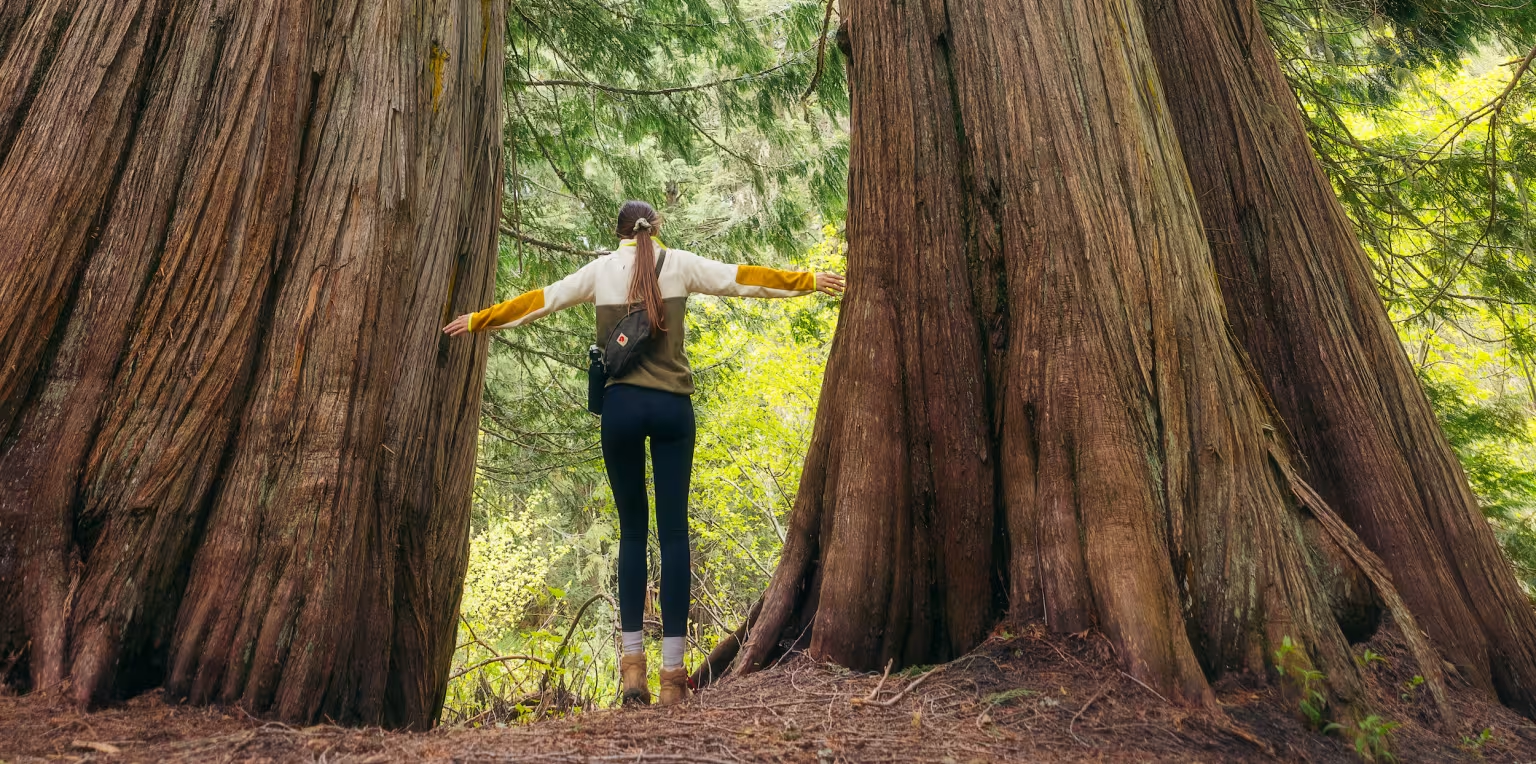
Fernie lies within one of the world’s rarest ecosystems — an Inland Temperate Rainforest. Tucked deep in the Rockies, this lush cedar-hemlock forest thrives hundreds of kilometres from the coast. It’s kept vibrant and green by the mountain snow that melts each spring, feeding the rivers, waterfalls, and forests that make Fernie so stunning year-round. The rare mix of moisture, climate, and elevation creates one of the planet's most unique rainforest ecosystems.
A Rare Ecosystem, Right Here
Fernie lies within one of the world’s rarest ecosystems — an Inland Temperate Rainforest. Tucked deep in the Rockies, this lush cedar-hemlock forest thrives hundreds of kilometres from the coast. It’s kept vibrant and green by the mountain snow that melts each spring, feeding the rivers, waterfalls, and forests that make Fernie so stunning year-round. The rare mix of moisture, climate, and elevation creates one of the planet's most unique rainforest ecosystems.
That Authentic Fernie Feeling

Living by the 20cm Rule
Once known mainly for its legendary powder days, Fernie has grown into a true four-season destination. Today, you’ll find just as much stoke off the slopes as on them; from hiking, biking, and fly fishing to art walks, live music, and a thriving local food scene. Outdoor enthusiasts, culture seekers, and everyone in between can find their rhythm here.
But don’t worry — we haven’t forgotten our roots. Fernie still carries that unmistakable “ski bum” soul, a little quirky and wonderfully real. When the Griz blesses us with 20cm or more overnight, locals know what to do - the unofficial “20cm rule” goes into effect. Shops might open a little later, and you might spot more skis than coffee cups in the morning. Because here in Fernie, chasing fresh lines is just part of the culture.


